Rates Are Still Doing the Tightening
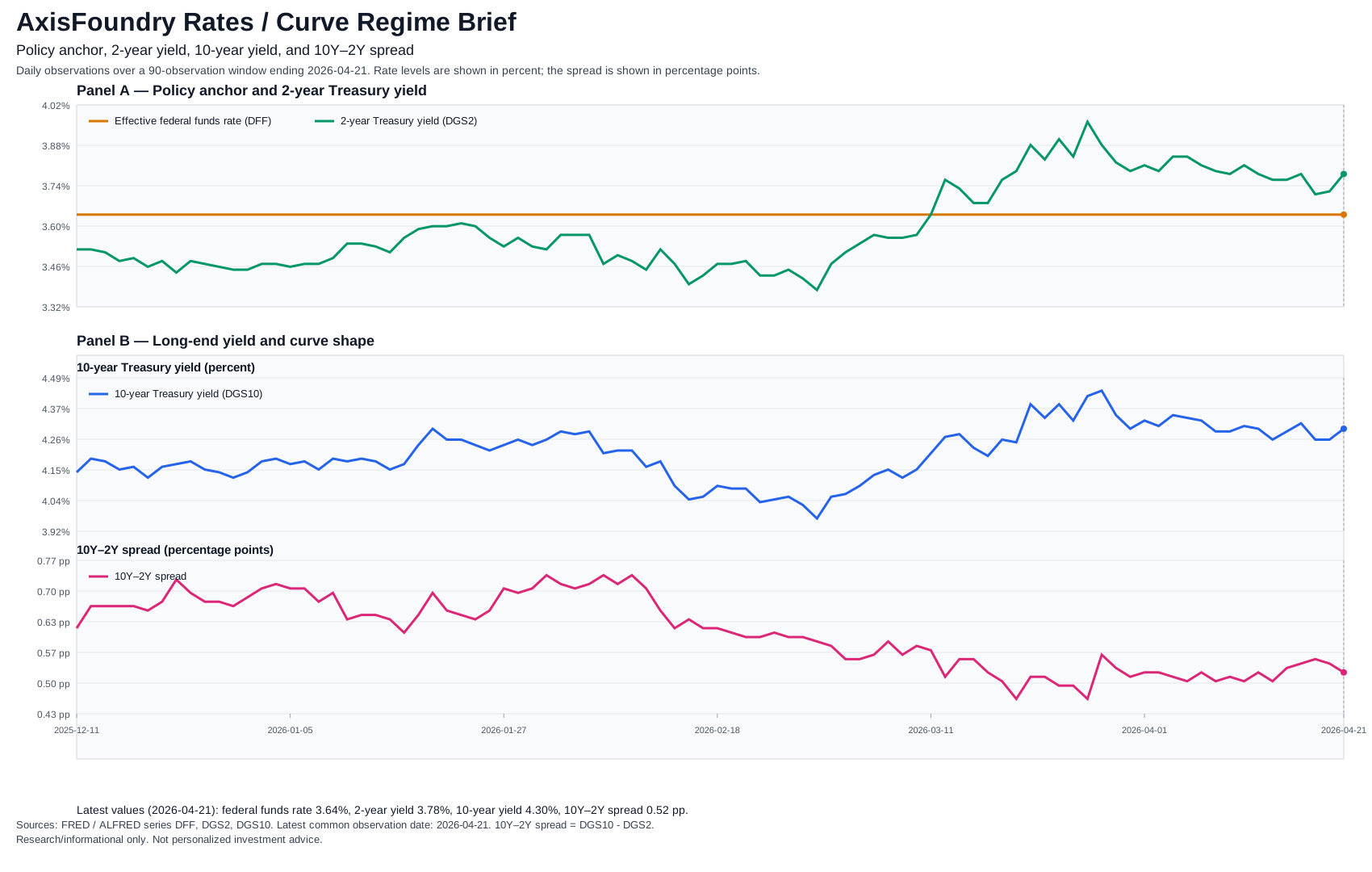
The Fed may be on hold, but the front end and long end remain near the upper end of the recent window, while the 10Y–2Y spread is positive but still compressed. That is not a clean relief signal for duration-sensitive risk.
The easy mistake is to treat a stable policy rate as a softer macro backdrop. The bond market is not giving that much relief. The policy anchor is unchanged, but market yields are still carrying part of the restrictive load.
Across the 90-observation aligned window used here, both the 2-year and 10-year Treasury yields sit near the upper end of their recent ranges, while the 10Y–2Y spread remains positive but compressed.
Thesis: Until the 2-year yield moves meaningfully back toward the policy anchor and the 10Y–2Y spread widens on aligned observations, the rates complex is still doing part of the tightening work even without a new move from the Fed.
Why now
A hold from the Fed can sound like the beginning of easier conditions. The problem is that the market rate structure has not yet confirmed that interpretation. The policy anchor is stable, but the front end and long end are still high enough to keep the macro backdrop restrictive.
That matters because duration-sensitive assets do not respond only to whether the Fed moved at the latest meeting. They respond to the level of rates investors have to discount against. If the 2-year and 10-year yields stay elevated, the pressure can remain even when the central bank is not actively tightening.
Evidence in plain English
The evidence is simple: the policy rate is steady, but market yields are still doing real work.
- The effective federal funds rate remains the policy anchor.
- The 2-year Treasury yield remains elevated within the recent 90-observation window used here.
- The 10-year Treasury yield remains elevated within that same window.
- The 10Y–2Y spread is positive, but it remains compressed rather than sending a broad relief signal.
In plain terms, this is not the same as a clean easing regime. A more constructive rates backdrop would require more than a stable policy rate. It would require front-end pressure to ease and the curve to widen in a way that looks less like tight conditions being carried forward by market yields.
What this changes
The current read argues for caution around any narrative that treats the rates backdrop as already benign. The curve is no longer telling the same story as a deeply inverted stress regime, but it also is not giving a clean all-clear.
That middle state matters. It leaves investors with a regime that is less dramatic than peak inversion but still restrictive enough to make valuation expansion harder to justify on rates relief alone. If risk assets are going to re-rate, the rates complex is not yet doing much of the helping.
Watch trigger / invalidation
This interpretation would weaken if the 2-year yield moved decisively back toward or below the policy anchor while the 10Y–2Y spread widened on aligned observations. That would suggest the market is beginning to price a materially easier path rather than simply carrying forward tight conditions through elevated yields.
The opposite would reinforce the current frame: if the 2-year and 10-year yields remain near the upper part of the recent 90-observation window while the spread stays compressed, the rates backdrop remains firm even without a new policy move.
Method and source note
This note uses FRED / ALFRED series DFF, DGS2, and DGS10. The 10Y–2Y spread = DGS10 - DGS2. The latest common observation date is 2026-04-21. The context is the 90-observation aligned window used here. No forward-fill, interpolation, or mixed-date observations are assumed.
Disclosure
Research and informational purposes only. Not personalized investment advice. Not a recommendation or solicitation to buy or sell securities.